
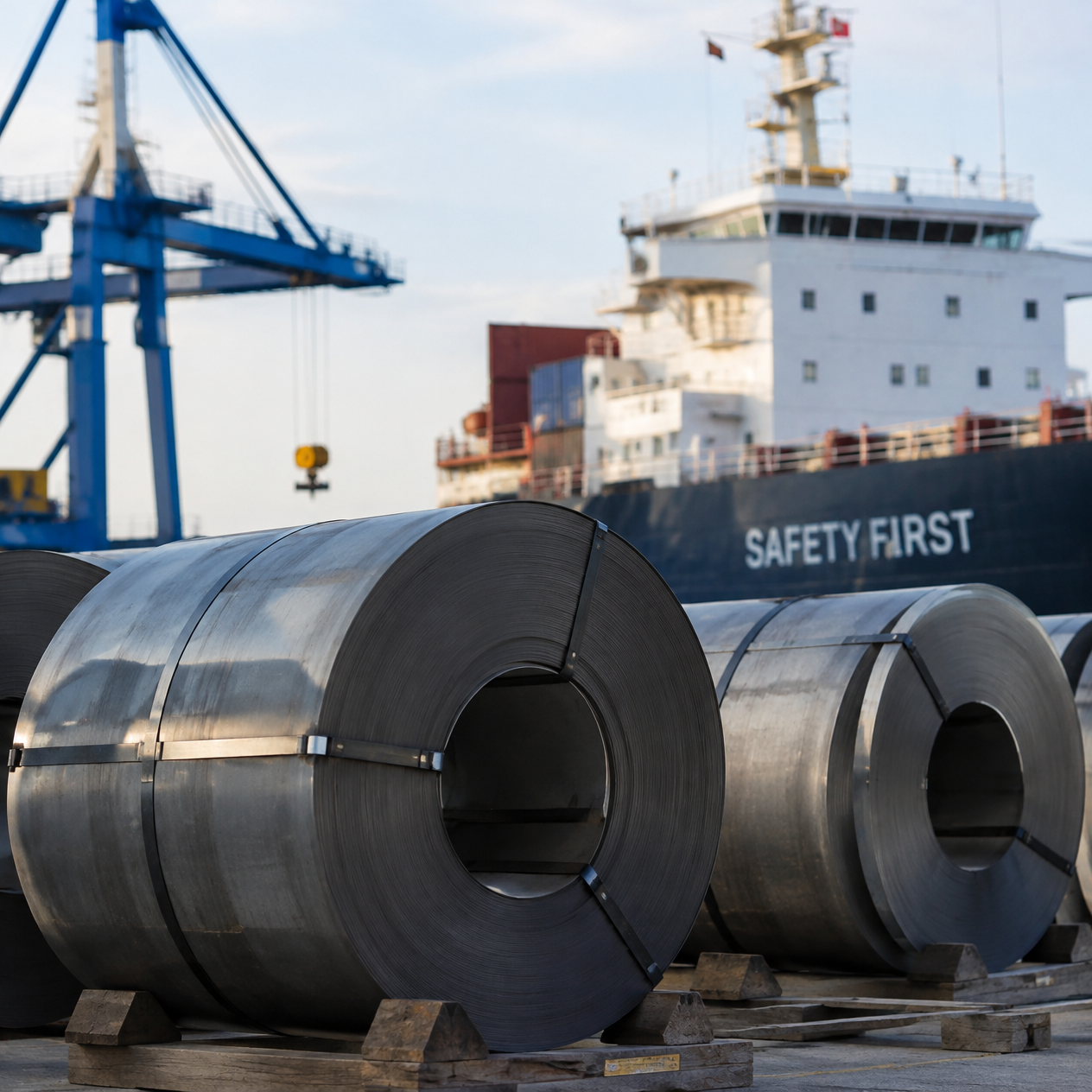
The best way to prevent container demurrage is to fix problems before the vessel arrives. Demurrage rarely arrives with a warning. It just turns up as a line item on an invoice, weeks after the cargo left the port. By then? Money’s gone.
I’ve spent more hours than I’d like at the gates in Cigading, Tanjung Priok and Merak. The pattern never changes. Steel coils come off the vessel right on schedule. Then it sits. A missing permit, a mismatched HS code, a trucker nobody booked. Each idle day costs more than the last.
This guide covers how to prevent container demurrage before it starts, using the same checks we run for steel importers every week.
What You Are Actually Paying For
Here’s the simple version: demurrage is what the line bills you when your box sits in the port past its allowed container free time. Detention is the sibling charge, applied when the container is out of the terminal but not returned on time.
Free time is short. Often just a few days after discharge. And the clock doesn’t care about weekends or public holidays. It keeps running. Pull out your bill of lading and the line’s tariff, and read the actual number. Don’t guess.
After free time ends, daily rates step up in tiers. A container that costs little on day one can become painful by day ten.
For heavy cargo like hot-rolled coil, wire rod or ERW feedstock, the exposure multiplies. You are rarely moving one box. You are moving a dozen, and every one of them ticks at once.
Quick reality check
- Free time starts at discharge, not when you are ready
- Weekends and holidays usually count
- Rates escalate in tiers, so delay compounds
- One stuck document can freeze every container on the bill of lading
Where Demurrage Really Comes From
Most importers blame the port. Congestion makes a convenient villain.
In practice, the majority of avoidable demurrage starts days or weeks earlier, on someone’s desk. Ask any broker in Jakarta or Banten. Same answer every time. Sort out the HS codes. Confirm the import permits (Lartas items). Do it before the vessel departs. The exposure shrinks fast. Some brokers claim up to 80% less on cargo that would have stalled at inspection. Rule of thumb. Not a promise. The logic still holds. Problems found in the exporter’s country cost an email. Problems found at the Indonesian gate cost money per day.
So the strategy is simple. Move every decision as far upstream as possible.
How to Prevent Container Demurrage: The Matrix
Use this table as a working checklist. Print it. Assign names to each row.
| Demurrage Risk Stage | High-Risk Operational Bottleneck | Preventive Action Required | Responsible Party | Cost Mitigation Impact |
|---|---|---|---|---|
| Pre-Shipment / Booking | Free time too short for the route; no agreement on terms; unrealistic delivery schedule | Request extended free days at booking; confirm tariff tiers in writing; align shipment dates with your plant’s receiving capacity | Importer + Forwarder | High: sets the ceiling for every later risk |
| Transit Period | Late or incomplete document release from the supplier; vessel schedule changes | Track vessel weekly; chase draft documents early; set a hard deadline for original B/L release | Forwarder + Importer | Medium: avoids the “cargo here, papers not” trap |
| Pre-Arrival Document Audit | HS code mismatch; invoice, packing list and mill certificate disagree; missing Lartas or SNI-related permits | Audit documents against each other 7–10 days before ETA; pre-verify HS code and permit status with your customs broker | Importer + Customs Broker | Very high: the single biggest lever |
| Customs Clearance & Red Channel | Physical inspection queue; slow response to customs queries; unpaid duties and taxes | Pre-fund duties; keep a named contact ready to answer queries within hours; prepare mill certificates for inspection | Customs Broker + Importer | High: cuts days off clearance |
| Port Gate-Out & Drayage | No trucks booked; heavy-load permits missing; plant cannot unload; empty return delayed | Book trucks before clearance completes; confirm unloading crane or forklift capacity; schedule empty returns on day of delivery | Forwarder + Importer | Medium to High: stops detention after demurrage is avoided |
Notice what the table shows. Only one row is in the carrier’s hands. The rest is yours.
Step 1: Negotiate Free Time Before You Book
The cheapest demurrage is the kind with a long runway.
Shipping steel? Ask for extended free time when you book. Not after the vessel sails. Lines bend a lot more while the slot’s still open. If your volumes are regular, you have leverage. Use it.
Disputes happen. When one does, you’ll be glad you already read up on negotiating demurrage and detention terms with shipping lines. Preparation wins these. Pleading doesn’t.
Scenario: A factory orders ten containers of cold-rolled coil. The default free time is seven days, but its internal receiving schedule needs twelve. Asking for extended free days at booking costs nothing. Discovering the gap on day six costs a great deal.
Step 2: Audit Documents Before the Ship Arrives
This is where the money is saved.
Seven to ten days before ETA, lay out the commercial invoice, packing list, bill of lading and mill test certificates side by side. Check weights. Check descriptions. Check quantities. Check that the HS code on paper matches the product actually loaded.
Small gaps, big headaches. The invoice lists the coil one way. The packing list says otherwise. Customs will ask. And while you answer, the clock keeps running.
Pre-arrival audit checklist
- HS code confirmed with your customs broker
- Lartas and import permit status verified
- Invoice, packing list and B/L consistent on weight and description
- Mill certificates ready for possible inspection
- Original B/L or telex release arranged
If a document is wrong, fix it at origin. A corrected invoice from the supplier costs a day. A correction after arrival costs a week.
Step 3: Pre-Fund and Pre-Plan Clearance
Clearance isn’t a single moment. Think relay race. Streamlining Indonesia customs clearance procedures for steel cargo boils down to this: filing, duties, taxes. Sorted before the vessel berths. Not after. Before.
Two habits carry most of the weight. One, keep the cash ready. Duties shouldn’t wait on some finance sign-off. Two, pick one person who answers customs queries the same day. Just one. Someone who actually picks up. When a query lands and your contact is on leave, free time keeps burning.
Expect that some shipments will be routed to physical inspection. Plan for it. Ask your broker how long inspection usually takes at your discharge port. Then bake that into your delivery schedule. Don’t just hope you’ll get lucky.
Step 4: Lock Down Trucking and Receiving
Clearance finished. Container released. And then nothing moves.
This is the most embarrassing kind of demurrage, because the paperwork was perfect. Steel’s heavy. So are the trucks that carry it. Heavy-load trucks, route permits, unloading gear: all of it needs booking ahead. Don’t wait for clearance to finish. Book while it’s still running.
Also confirm that your plant can actually receive the cargo. No crane slot on Monday? Then eight containers can’t land on Monday. Spread deliveries out to match what your yard can actually unload.
Then watch the empty return. Box leaves the port? Detention takes over. So plan the empty return for the day you unload. Same day, if you can.
Step 5: Communicate Like Cash Depends on It
Because it does.
Set up one shared channel between you, your forwarder, your customs broker and your trucker. A WhatsApp group works. For bigger shipments, a weekly call beats the chat group. Whatever you pick, everyone needs to see the same ETA, the same document status and the same deadline.
Most demurrage stories I have seen end the same way. Everyone assumed someone else was handling it.
A Realistic Week-by-Week Timeline
- 2–3 weeks before ETA: Confirm HS code and permits with your broker. Chase draft documents.
- 7–10 days before ETA: Complete the document audit. Fix errors at origin.
- 3–5 days before ETA: Pre-fund duties. Book trucks and unloading slots.
- Day of discharge: Free time starts. Confirm filing status and release.
- Release to delivery: Move cargo immediately. Schedule empty returns.
When Demurrage Happens Anyway
Sometimes it will. Congestion. Late vessels. Inspection queues. All real.
So keep records. Screenshot everything. Timestamps, emails, gate logs, whatever you’ve got. If the terminal or carrier caused the hold-up, ask for a waiver. Or at least a cut. Just bring proof. Paperwork is what makes anyone believe you.
Ask quickly, too. Lines respond better to prompt, organized requests than to disputes raised months later.
Prevent Container Demurrage Before You Book
You will not prevent every delay. But you can remove the avoidable ones, and for most Indonesian steel importers, those are the majority.
Verify documents early. Negotiate free time before booking. Pre-fund clearance. Book trucks ahead. Keep one channel open for everyone. Do all five, every single shipment, and demurrage stops ambushing you.
If you want help building this into your next steel shipment, talk to our team at mahiaekspres.com before the booking is confirmed, not after the container is stuck.
About the Author: Ilham Sandri Koto