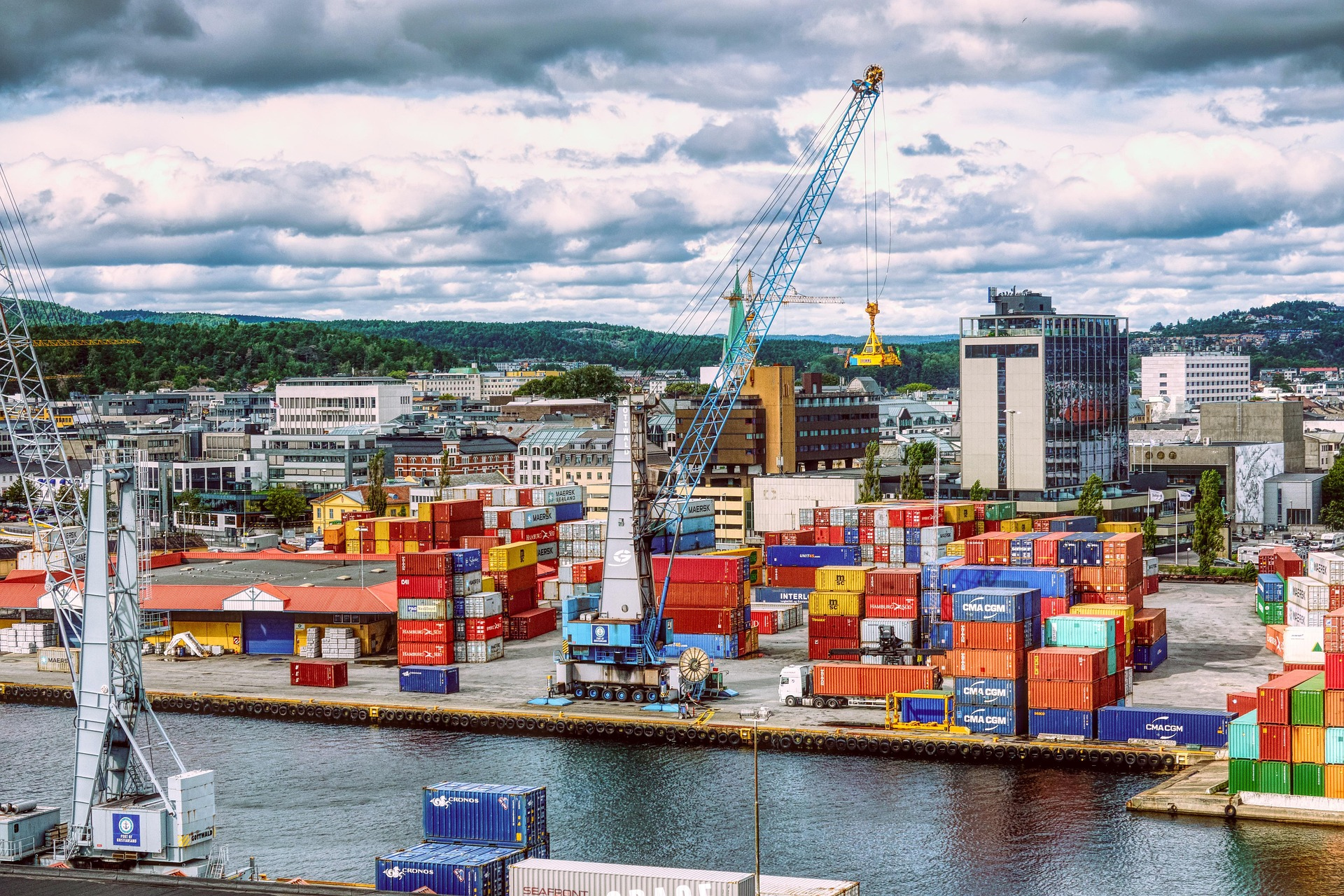
Lartas in Indonesia is the single word that decides whether your steel cargo clears in three days or sits on a quay for three weeks.
I have watched both outcomes at Cigading, Tanjung Priok and Merak. The difference was almost never the cargo. It was the paperwork that existed, or didn’t, before the vessel berthed.
What Is Lartas in Indonesia?
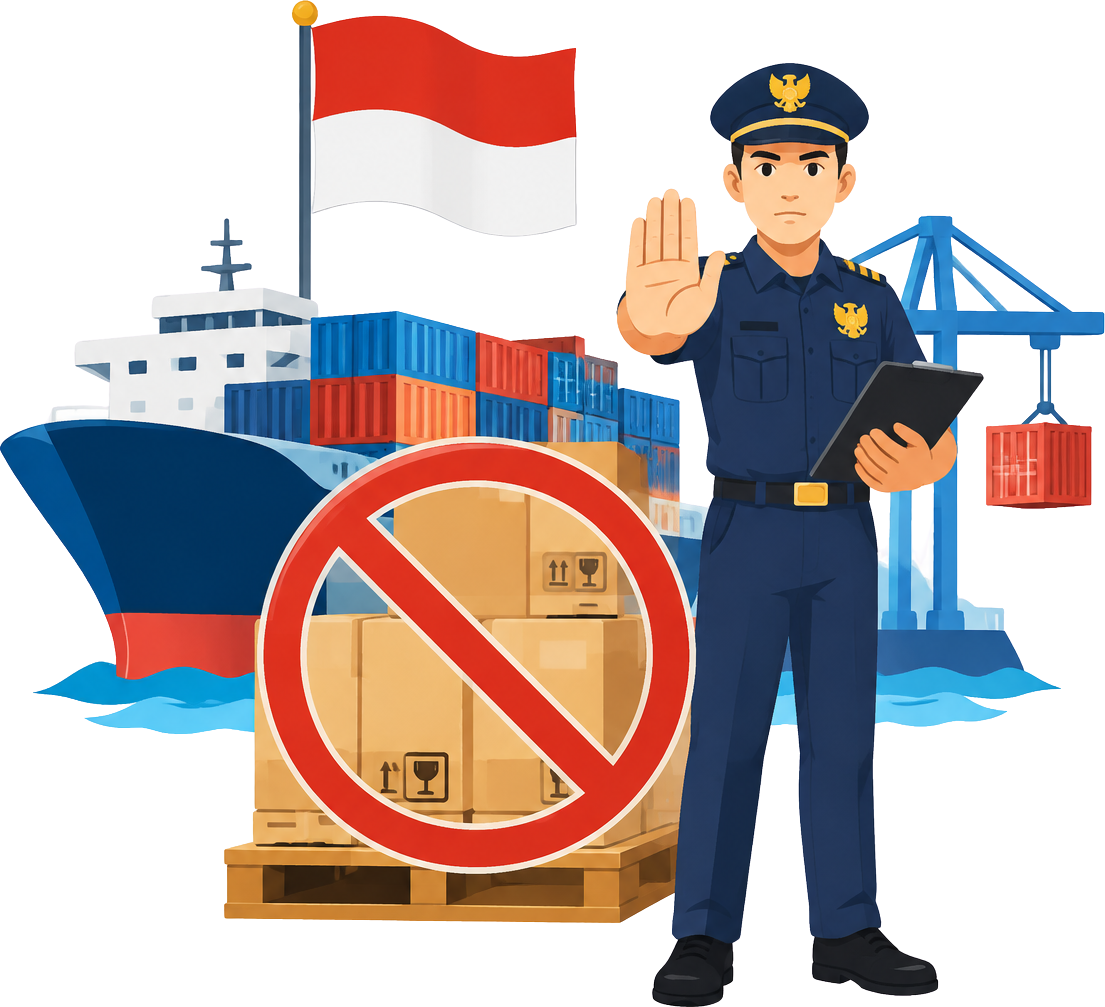
Lartas stands for Larangan dan/atau Pembatasan: prohibitions and/or restrictions. It is the label Indonesian Customs and the Ministry of Trade apply to goods that cannot simply be declared and cleared on a commercial invoice alone.
Two buckets exist.
- Prohibited goods (Larangan): cannot be imported at all.
- Restricted goods (Pembatasan): can be imported, but only with specific permits, verification or standards compliance.
Most steel falls into the second bucket. That is where importers get hurt, because “restricted” sounds like “manageable” until you realise the permit has to exist before shipment, not after arrival.
If you want the wider regulatory frame, our complete compliance guidelines for Indonesia steel import regulations cover the legal layers in more depth. This article stays focused on how Lartas actually behaves at the port.
Why Lartas Steel Import Rules Target Steel
Steel is a political football in Jakarta, and has been for years. Local mills want shelter from cheap imports. Downstream factories, meanwhile, can’t always find the feedstock they need at home. Lartas is how the government tries to keep both sides from walking out.
That means rules shift. First came Permendag 36/2023. Then the 2024 amendments. Then a 2025 overhaul. And 2026? Tighter again for steel. Your import approval data now has to match the customs declaration, line for line. Regulation numbers age badly, and most compliance manuals can’t keep up.
Old document, old number? Use it as a lead, never as proof.
The Documents Behind a Steel Lartas Clearance
For regulated steel HS codes, the chain generally runs through three institutions and three document types.
- Pertimbangan Teknis (Pertek): this is the Ministry of Industry’s technical sign-off, filed through SIINas. They look at your production and import plan, the HS code, the spec, the loading country and the destination port. Everything has to line up. Their stated turnaround is five working days, but only once your file is complete.
- Persetujuan Impor (PI): the Ministry of Trade’s import approval, built on top of your Pertek. Your importer identity matters here. API-P, the producer? Or API-U, the general importer? That one label shapes what you can apply for. It also limits what you can do with the steel after it lands.
- Laporan Surveyor (LS): the verification report from a government-appointed surveyor, confirming the cargo matches what the PI authorises.
Here’s one that trips people up. AEO or MITA status can ease some surveyor requirements. The PI for steel? No such luck, going by industry reporting. No exemption. A trusted-operator badge does not replace the permit.
The Lartas Matrix for Steel and Industrial Cargo
Think of this as a rough map, not the final word. What actually applies hangs on your exact 8-digit HS code in the current BTKI. That code decides everything.
| Cargo / Steel Commodity Category | Lartas Classification (Border vs. Post-Border) | Governing Ministry & System | Mandatory Clearance Document | Common Customs Clearance Bottleneck |
|---|---|---|---|---|
| Prime steel coils / HRC (e.g. HS 7208 range) | Border: checked at the port of entry | Kemenperin (SIINas) for Pertek; Kemendag (INSW) for PI; appointed surveyor for LS | Pertek + PI + LS, plus SNI where the product is under mandatory standard | PI quantity or spec not matching the B/L and commercial invoice; PI validity expired before arrival |
| Non-prime / secondary steel (off-spec, defective, re-rolled) | Restricted or effectively blocked; classification is strict and enforcement is heavy | Kemendag with Customs enforcement | Rarely clearable; treat as high-risk until confirmed in writing for the specific HS code | Cargo declared as prime but described as secondary in mill certificates; re-export orders |
| Structural shapes (H-beam, angles, channels) | Mixed: border for some HS lines, post-border or standards control for others | Kemendag / Kemenperin; SNI administered by the standards regime | PI and/or Pertek where listed; SNI approval for covered shapes | Mill test certificates not tied to heat numbers; SNI scope confusion between shape and grade |
| Heavy machinery, new | Mostly outside border Lartas, but standards, safety and registration rules may apply post-border | Sector regulators (industry, manpower or safety agencies depending on equipment) | Equipment-specific registration or conformity papers, if applicable | Importer assumes “machinery means no permit” and discovers a sector rule at the port |
| Heavy machinery, used / reconditioned | Border: restricted, tight conditions | Kemendag (PI) with surveyor verification | PI + LS, with strong documentation on condition, age and purpose | Missing proof of condition; mismatch between declared use and importer identity |
One caution on this table: border and post-border labels can change when a ministry reissues a regulation. Verify before you contract.
How Lartas Looks When It Goes Wrong
Here is the pattern I see repeated by local clearance teams.
A vessel arrives. The importer’s agent files the PIB (customs declaration). The system cross-checks the HS code against the Lartas list on INSW. No valid PI is attached, or the data doesn’t match. The consignment gets a red-lane hold.
Then the clock starts.
Experienced Indonesian clearance specialists share a consistent operational view: arriving at port without a verified Lartas permit trail on INSW is rarely fixed on the quay. Applying for an amended or new approval after berthing means demurrage, storage and potential re-export instructions, and that cost usually exceeds the margin on the whole cargo.
That is why I keep telling clients the same thing. Port delays are rarely a logistics failure. They are a paperwork-timing failure. If you want a sharper look at how that bleeds money, read our piece on preventing common supply chain mistakes that drain operational margins.
Step-by-Step Lartas Verification Workflow
Run this sequence before you sign the sales contract.
Step 1: Confirm the HS code on INSW
Open the INSW portal and search the exact HS code against the current Lartas and BTKI data.
Callout: Check three things
- Is the HS code listed as Lartas?
- Which agency and permit type does it trigger (Pertek, PI, LS, SNI)?
- What importer identity (API-P or API-U) is allowed to apply?
Practical scenario: A trader buys HRC described as “hot-rolled steel sheet” but the mill classifies it under a different heading than the one the importer used for the PI. Customs sees two codes for one cargo. The shipment is held.
Step 2: Secure the Pertek and PI before shipment
File the Pertek first, then the PI. Do not let the seller load the vessel until the PI is issued.
Callout: Pre-shipment checklist
- Product spec, thickness range, width, grade and quantity written identically across the PI, the sales contract and the mill certificate
- Country of origin and loading port stated consistently
- PI validity period longer than the realistic voyage time plus buffer for berthing delays
A recurring mistake is ordering a flexible quantity “plus or minus ten percent” on the contract, while the PI states a fixed tonnage. The mismatch sits quietly until arrival.
Step 3: Plan the surveyor inspection
The LS confirms what the PI approved. Surveyors verify quantity, specification and, where relevant, documentation against what physically arrives.
Callout: What surveyors look at
- Mill test certificates and heat or coil numbers
- Bundle tags and markings against the packing list
- Condition signs that contradict the declared “prime” status
Cargo billed as prime but covered in rust pitting, edge damage or uneven gauge? Expect questions. A cosmetic flaw doesn’t automatically make cargo non-prime. But don’t wait to be asked. Have the answer in your paperwork already.
Step 4: File the PIB and manage customs release
Don’t file the declaration until every supporting document agrees with the others. Policy is leaning hard on PI-to-PIB reconciliation now, so close isn’t good enough. The numbers have to match.
Callout: Release readiness
- PIB values, quantities and HS code match the PI exactly
- LS reference number ready for upload
- Duty and tax payment lined up in advance
- Truck and storage slots booked, so a cleared cargo doesn’t sit anyway
Common Mistakes by Foreign Exporters
Overseas mills and traders often assume an Indonesian importer can “fix it later.” It can’t.
- Shipping on a verbal promise that the PI is coming.
- Changing the loading port or country of origin after the PI is issued.
- Splitting a shipment across vessels without confirming PI treatment for partial lots.
- Relabelling cargo to match a permit rather than correcting the permit to match the cargo.
The last one is the dangerous one. Mislabelling moves a delay into a penalty or enforcement case.
What to Do Next
Audit your open orders. This week.
Pull every HS code. Check it on INSW. Then lay the PI, Pertek and contract side by side: do they describe the same cargo? If any of them disagree, sort it out before the vessel sails.
Steel rules have shifted again and again since 2023, and they’re still moving in 2026. So before you commit to a shipment, confirm the current rule with a licensed customs broker or the issuing ministry. And a reminder: this is general guidance, not legal advice for your specific consignment.
Want a second pair of eyes on a Lartas check before your next steel booking? Reach the Mahia Ekspres team through mahiaekspres.com
About the Author: Ilham Sandri Koto